Why It Is Called "Five Terraces"
"Tai" does not mean high; it means flat. The tops of the five peaks are level like terraces, and so the name came about. They stand encircling one another, enclosing a valley in the middle—Taihuai.
In Buddhist tradition, Mount Wutai is regarded as the bodhimanda of Manjushri. This account has been passed down for more than a thousand years, and it has also placed this mountain at the forefront among China's famous Buddhist mountains.
From north to south, the five summits are: North Summit Yedou Peak, Central Summit Cuiyan Peak, East Summit Wanghai Peak, West Summit Guayue Peak, and South Summit Jinxiu Peak.
Five Heights
Only a Few Months a Year
Winter comes early to the summits. Snow begins to accumulate from October, and the mountain roads are closed; it is not until April or May of the following year that the road surface is open to traffic again.
That is to say, the time in a year when one can stand on the summits is only about five months. In the remaining months, the mountain is in the snow.
For every 1,000 meters of elevation gain, the temperature drops by about six degrees. At 3,061 meters, even the midday summer wind can make a person put on a jacket.
One Number
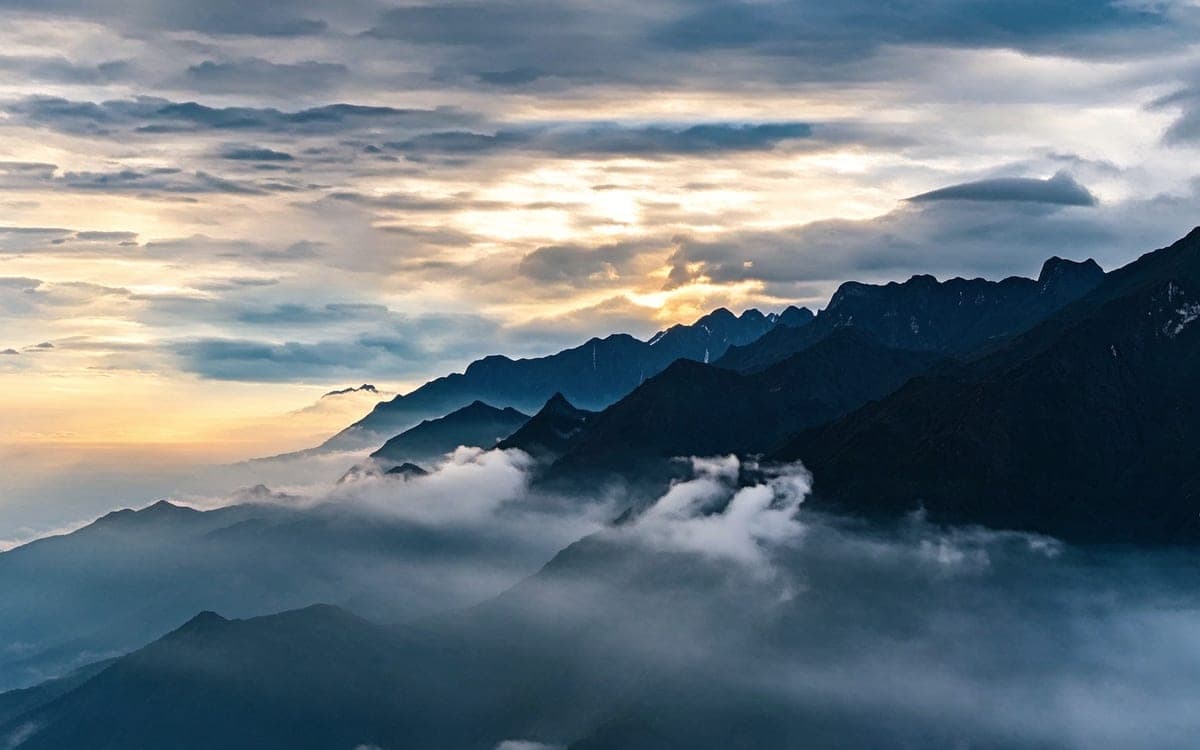
3,061 meters is not an abstract height. It means thin oxygen, stronger winds, and clouds that are often below you.
It also means that most people cannot get there.