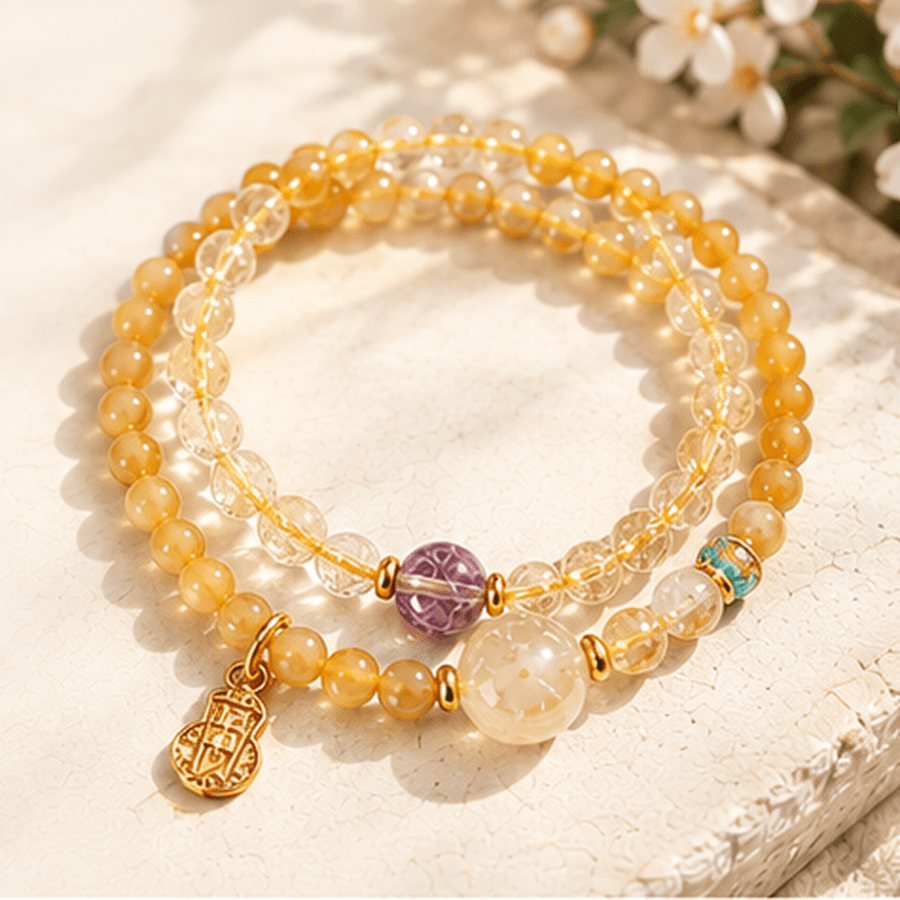
No two natural stones are identical
Temperature, pressure, mineral content and cooling rates during formation affect colour, transparency, internal texture and surface lustre. Even beads cut from the same rough material rarely look exactly the same.
These differences are part of identifying a natural material. They should not automatically be labelled as defects, but a crack that reaches the surface, an edge that scratches the skin or a visible chip around a drill hole still deserves attention and should be discussed with the seller.
What internal fractures, cloudiness and colour bands are
"Ice-like fractures" usually describe reflective lines or local internal fissures that look like light caught in ice. "Cotton" often refers to white, cloudy or fibrous inclusions. Both are common visual features in natural quartz and do not necessarily mean the bead has broken apart.
Colour banding means that pigment or structure is uneven within one bead: it may look lighter in direct light and deeper from the side. Some stones also contain needle-like, flake-like or dot-like inclusions. Look at several angles and daylight images instead of relying on one white-background photograph.
Where colour differences in photographs come from
Screen colour profiles, lighting and background colour all change how stone appears. Cool light can emphasise blue and violet; warm light can deepen yellow and orange. A translucent bead may also look more saturated against a dark background.
After delivery, view the bracelet in soft daylight first and then compare it with indoor lighting. Some natural colour variation is expected. If the actual colour, bead diameter or quantity differs materially from the product description, keep unboxing photos or video and contact customer service promptly.
Everyday wear and storage
Perfume, sunscreen, lotion and cleaning products can remain on the stone surface or in the cord. Finish personal care first, then put the bracelet on. Remove it during sport, heavy lifting or activities with strong friction to reduce impacts and pulling.
When not worn, keep the bracelet in a dry pouch or a separate compartment away from keys and metal jewellery. Avoid humid, poorly ventilated or sun-exposed storage, and do not place heavy objects on top of the bracelet.
Cleaning: gentle, low water, thoroughly dry
Wipe the bracelet with a clean soft cloth for routine care. If there is visible perspiration residue, use a slightly damp soft cloth and dry it immediately. Do not soak the piece, and do not assume every natural stone or cord is suitable for an ultrasonic cleaner.
Avoid bleach, strongly acidic or alkaline cleaners and abrasive brushes. After cleaning, make sure the drill holes, knots and metal parts are dry before returning the bracelet to its pouch. If the piece contains wood, cinnabar-style material or other composites, follow the care note on that product page.
When to contact us
Slight colour variation, natural inclusions and small differences in hand-braided tension are normally characteristics of the material and construction. If a bead develops a new chip, the cord becomes visibly worn, a sliding knot stops holding or the bracelet keeps scratching the skin, stop wearing it and contact us to discuss the next step.
Care is not about keeping a natural object exactly as it looked when new. It is about limiting avoidable wear so the texture, lustre and construction remain stable through everyday use.